
How to choose a bridal lehenga colour for your skin tone
How to pick a bridal lehenga colour that flatters your skin tone — undertones, designer recommendations from Sabyasachi to Faraz Manan, and 2026 trends.
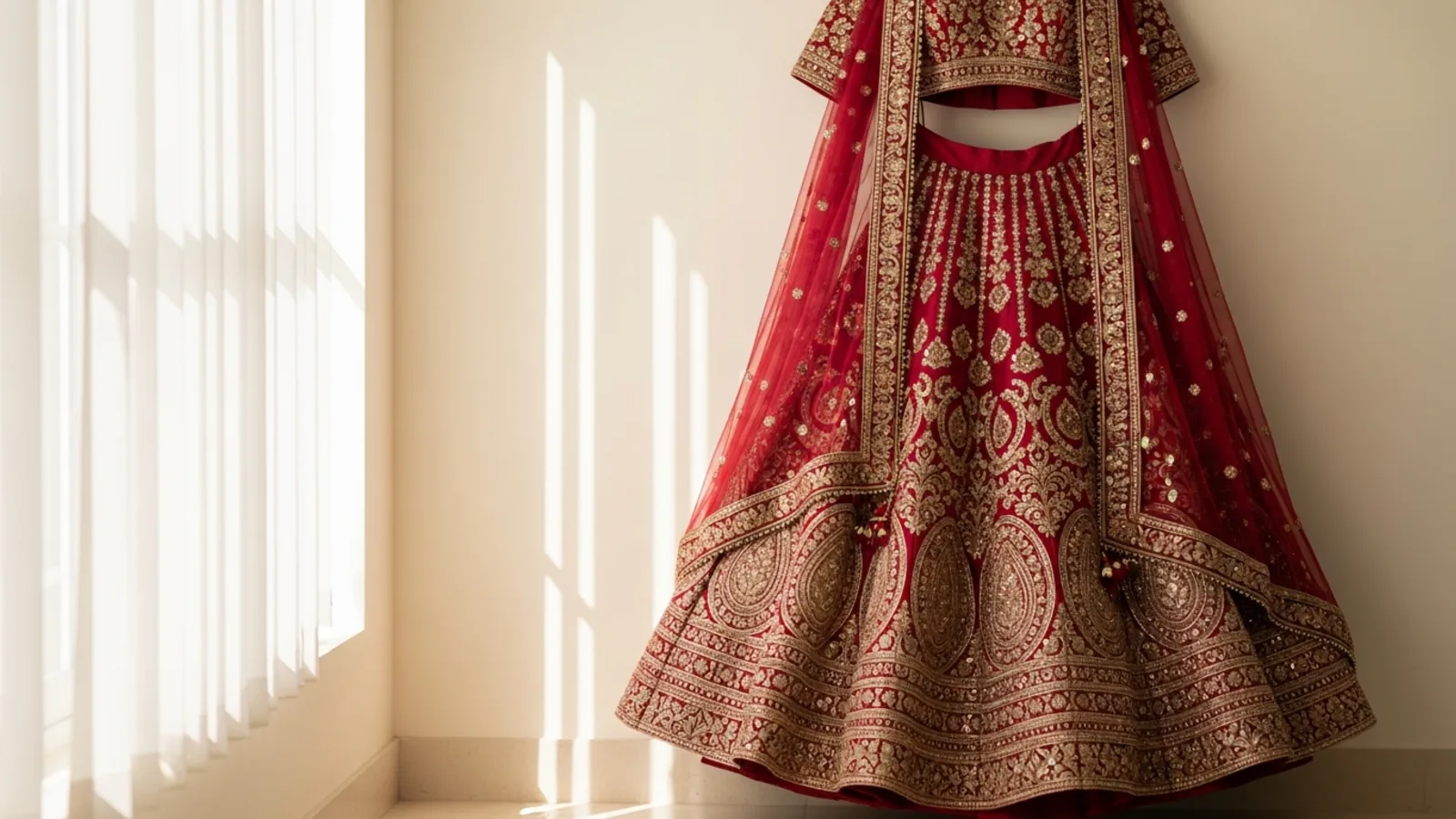
The lehenga colour decision is the first decision you can't change. The venue might shift. The guest list might grow or shrink. The mehndi date might float by a week. The lehenga colour, once chosen, sets the tone of every photograph you'll keep for the rest of your life. It's also the hardest decision to make standing in a boutique under fluorescent lighting after your fourth dupatta change of the morning.
So, before any of that — start with your undertone.
Why colour matters more than embroidery
Most brides spend the first few hours of bridal shopping looking at embroidery. Heavy zardozi, fine kamdani, sequinned florals — every piece dazzles. The embroidery becomes the easy story. The colour becomes the harder one.
Here is the truth: the embroidery photographs the same regardless of how it makes you feel. The colour, on the other hand, is the part of your lehenga that does the work of making you look radiant or making you look washed out. Your aunty's compliments will be about the embroidery. Your photographs will be about the colour.
How to find your undertone honestly
The classic at-home test, in natural daylight with no makeup:
- Hold a piece of pure white paper next to your bare wrist. If your skin looks creamy yellow or peachy against the white, you're warm-toned.
- If your skin looks pinkish, rosy, or slightly blueish, you're cool-toned.
- If you can't quite tell, or you look both peach and pink depending on the light, you're neutral.
A second test — look at the veins on the inside of your wrist:
- Greenish veins → warm undertone.
- Blueish or purple veins → cool undertone.
- A mix of both → neutral.
Most British South Asian brides fall into either warm or neutral, with a smaller cool-toned minority. Your undertone is independent of how light or deep your skin is. Two brides at completely different points on the depth spectrum can both be warm-toned and look stunning in the same colour family.
Best lehenga colours for warm undertones
Warm undertones are flattered by colours that share their natural golden, peachy, or red-leaning warmth. The strongest plays:
- Oxblood and deep crimson. Sabyasachi has built a career on this colour. Heavy raw silk, gold zardozi, almost burgundy in low light — the most photographable bridal red on warm skin.
- Marigold and mustard. Under-used in modern bridal. Mohsin Naveed Ranjha and Faraz Manan both do beautiful versions in jamawar and raw silk.
- Terracotta and rust. Quieter than red, photographs warm against most British wedding venues, especially country house and barn settings.
- Brick reds and tomato reds. The classic North Indian and Punjabi bridal palette, most often paired with antique gold work.
- Peach with gold. Modern, soft, photographs particularly well in golden hour and outdoor weddings.
- Ivory with antique gold zardozi. Ivory is a deceptive cool, but with warm gold work (not silver), it becomes a warm-undertone piece. HSY and Manish Malhotra both do this exceptionally.
What to avoid: pure icy whites, very stark cool blues, lavender pastels — these tend to drain warmth from the skin in photos.
Best lehenga colours for cool undertones
Cool undertones suit colours that share their blue or rosy bias:
- Icy pink and dusty rose. Élan does these in delicate organza with silver kamdani. Maria B's bridal collections explore this palette regularly.
- Plum and aubergine. Exceptional on cool-toned brides, photograph beautifully against UK winter venue lighting.
- Deep emerald. Emerald is one of the few colours that genuinely flatters every undertone, but it is especially striking on cool skin. Look at Sabyasachi's emerald drops.
- Midnight blue and royal blue. Under-explored as a bridal colour for South Asian weddings, but extraordinary when done right. Suits cool-toned brides who want to break with red entirely.
- Cool silver-cream. Lehenga in silver-leaning ivory with silver embroidery, no gold. Manish Malhotra's couture line does this exceptionally.
- Wine and bordeaux. Slightly cooler than oxblood, suits cool undertones better than the warm reds.
What to avoid: warm yellows, marigolds, very orange-leaning corals — these can clash with cool skin.
Your bridal lehenga deserves another big day.
Somewhere in Britain, a bride is searching for exactly what's hanging in your wardrobe. List it free on Desipop. Keep 100% of your earnings.
01Snap it. A few clear photos on your phone.
02Price it. You set it. You keep all of it.
03List it. Seen by buyers UK-wide.
 Live on Desipop
Example listing for illustration
Best lehenga colours for neutral undertones
If your undertone is neutral, you have the widest palette. Your strongest plays:
- Classic reds. Both warm reds and cool reds work — pick by venue and season.
- Champagne and antique gold. Photograph beautifully in any light.
- Soft sage and pastel green. Modern, fresh, breaks from the bridal red expectation.
- Dusty pinks and muted roses. Versatile across both warm and cool light.
- Royal blue with gold work. The regal play that works on neutral skin like no other undertone.
What British South Asian brides are choosing in 2026
A quick read of where the trend conversation is settling for the 2026 season:
- Pastels with heavy embroidery are in. Manish Malhotra's pastel ombré pieces are influencing what mass-market boutiques are now stocking. Maria B and Mohsin Naveed Ranjha are also moving in this direction for their bridal lines.
- Oxblood and traditional red are not going anywhere. The off-red experiment of the last few years has had its moment; classic red is back and confidently so for both Pakistani and Indian brides.
- Bengali brides are leaning back into traditional red banarasi sarees rather than the lehenga pivot some made over the last decade — but in modern silhouettes and with structured blouses.
- Marigold and mustard are the breakout of the year for mehndi, walima, and second-event lehengas. A quieter alternative for brides who don't want to wear traditional red on a non-shaadi event.
- Velvets are for winter weddings only. If your wedding is November to February in the UK, velvet plays. If it's a summer wedding, raw silk, organza, and tissue silks read better.
- Faraz Manan and HSY are leaning into heritage reds with modern silhouettes — fitted blouses, cleaner skirt cuts, less dupatta volume.
Trying it on in person versus ordering online
If you're shopping in person at a UK Asian boutique:
- Always step outside the boutique into natural daylight before you decide. Boutique lighting is ruthless.
- Stand next to the lehenga held against your face. Don't trust the floor-to-ceiling mirrors alone.
- Take a photo of yourself in the colour, on your own phone, then look at the photo before you commit. Photos don't lie the way mirrors do.
- Bring someone with cool eyes. Not your mum, if your mum will say everything is beautiful.
If you're ordering online:
- Ask for fabric swatches before you commit, especially for jamawar, raw silk, or velvet. Colour rendering on a screen is rarely accurate.
- Watch a video of the piece in motion if available. Embroidery and colour both behave differently in light than they do in studio shots.
- Read the seller's description for fabric content. Raw silk varies enormously in weight and drape between makers.
- Direct seller-to-buyer marketplaces like Wedpop carry pieces from designers and individual sellers across the UK with delivery to anywhere in Britain — useful if you're outside the major bridal hub cities.
The one rule nobody mentions
The lehenga colour you fall in love with on the hanger is not always the lehenga colour that suits you. The reverse is also true. The colour that suits you most might be the one you would never have picked off a rail.
Trust the photo over the mirror. Trust your undertone over your aunty's preference. The wedding is yours.
Browse bridal lehengas by colour, designer, and seller across the UK on Wedpop.
Frequently asked questions
Is red still the standard bridal lehenga colour for British Pakistani brides?
What lehenga colour suits dark skin tones?
What's the best fabric for a UK winter wedding lehenga?
Should I pick the lehenga colour or the venue first?
Can I wear the same lehenga colour at multiple wedding events?
What lehenga colours are British Pakistani designers leaning into for 2026?
Your bridal lehenga deserves another big day.
Somewhere in Britain, a bride is searching for exactly what's hanging in your wardrobe. List it free on Desipop. Keep 100% of your earnings.
01Snap it. A few clear photos on your phone.
02Price it. You set it. You keep all of it.
03List it. Seen by buyers UK-wide.
Live on Desipop
Example listing for illustration
Read next
Can you wear black to a Pakistani wedding? The honest, event-by-event answer
Black can be elegant at a South Asian wedding, but the right choice depends on the event and the hosts. Here is a practical guide to styling black and checking local dress expectations.
Diwali 2026 outfit guide — the UK family party season
Diwali in the UK is no longer one day — it's a season. The honest 2026 outfit guide for British South Asians dressing for puja, family parties, and friend gatherings.
Where to buy bridal lehengas — Birmingham vs Manchester vs London
Three cities, three very different bridal experiences. The honest read on what each city offers, what to expect on price, and which suits which bride.